A few weeks ago, while I was working from home, my phone rang. The caller ID showed my mother's name. I picked up immediately.
The voice on the other end was hers — her exact tone, her accent, even the way she slightly drags the word "dear" when she's worried. She said she was at the hospital, that my uncle had met with an accident, and that she needed me to transfer ₹40,000 urgently for the treatment to begin.
My hands moved before my brain could catch up. I opened my UPI app. I was already typing the amount.
But something felt off.
She used the word "transfer." My mother has never used that word in her life. She always says "send the money." That one small detail made me pause. I hung up and immediately called her back on a different number.
She was at home. Completely fine. She had never called me.
I had nearly wired money to an AI.
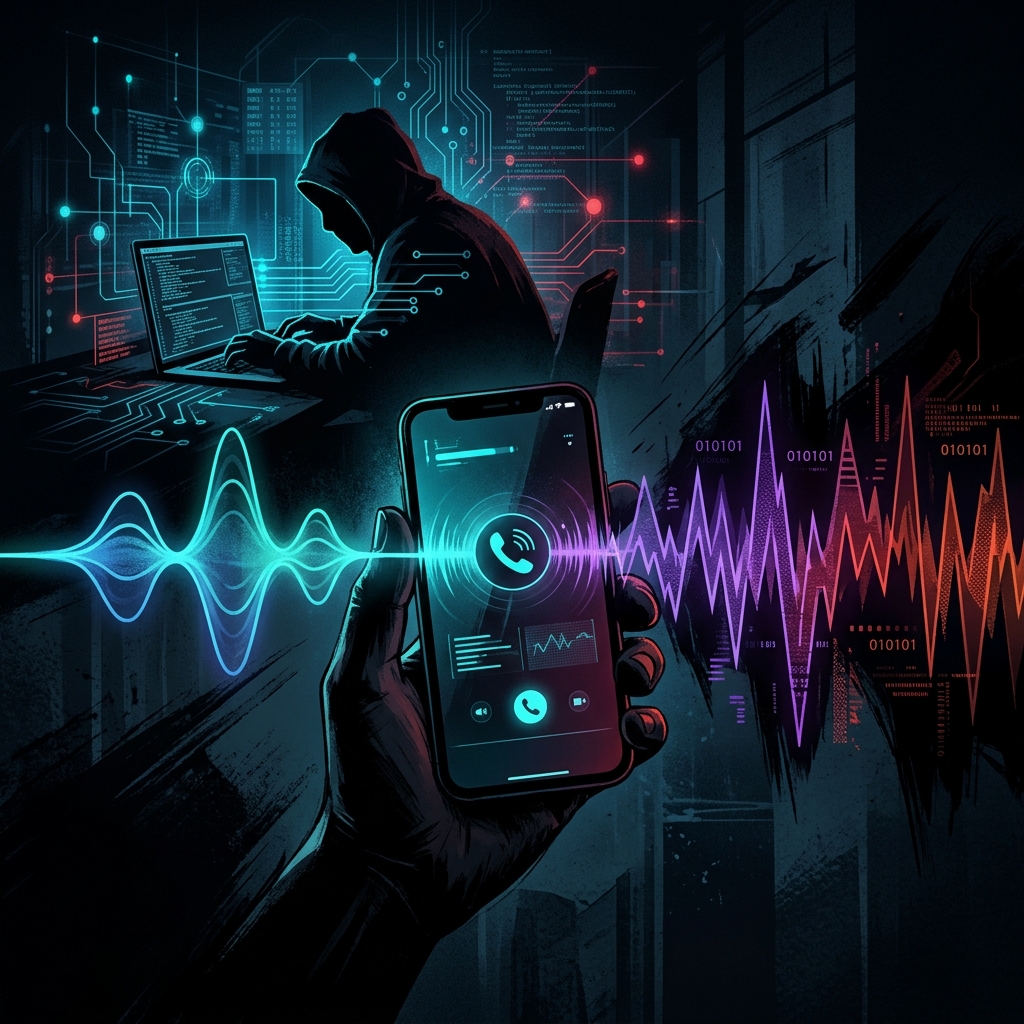
AI Voice Cloning (Vishing) Threat
What I experienced is called vishing — voice phishing — powered by AI voice cloning. Attackers today need as little as 3 to 10 seconds of a person's voice, collected from a WhatsApp status, a video call recording, or a public reel, to clone it convincingly using tools that are freely available online.
The cloned voice is then used to impersonate someone the victim trusts deeply — a parent, a friend, or even a bank official — and the call is always wrapped in urgency, panic, and emotion to prevent the victim from thinking clearly.
According to CrowdStrike's research on AI-powered cyberattacks, AI is increasingly being used by cybercriminals to make social engineering attacks more convincing, faster to execute, and harder to detect. Voice cloning is one of the fastest-growing tools in their arsenal.
After that experience, I changed how I respond to emergency calls. Now, my family has a private code word that only we know — something no AI could guess from our public profiles. Before acting on any urgent call, I always hang up and call back on a number I saved myself. I never trust caller ID alone, since phone numbers can be spoofed easily.
Many people believe they would never fall for something like this. But the reality is that these attacks are not designed for careless people — they are designed to exploit the most human parts of us. Love. Fear. The instinct to protect someone we care about. One moment of panic is enough to bypass years of technical knowledge.
"Cybersecurity is not just about protecting your passwords or patching your software. Sometimes it is about protecting your emotions from being weaponized against you."
The most dangerous cyberattacks today do not break through firewalls.
They go straight through your heart.